
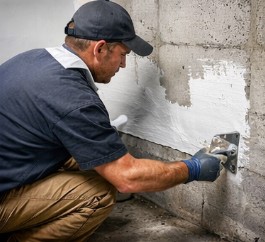
The lower level of your home serves as the structural foundation for your entire property, making it susceptible to the immense forces of underground water. When moisture begins to compromise this critical area, the safety, air quality, and overall market value of your residence are immediately placed at risk.
Recognizing the subtle signs of water intrusion early allows you to take proactive measures before minor dampness evolves into a major structural catastrophe. Understanding exactly when to consider a professional interior waterproofing system is essential for maintaining a healthy and stable living environment.
Identifying Persistent Musty Odors and Humidity
The most frequent early warning sign of a basement moisture problem is a lingering, musty smell that remains despite your best efforts to ventilate the space. This odor is a direct byproduct of mold and mildew growth occurring in areas where dampness is trapped against your foundation walls or beneath your floor.
- If your dehumidifier runs constantly but still struggles to bring the relative humidity below fifty percent, you likely have an active moisture source.
- Look for patches of white, powdery residue on concrete walls, which is a mineral buildup known as efflorescence that appears as water evaporates.
- Checking the condition of stored cardboard boxes or wooden furniture can reveal hidden humidity issues if these items feel damp or develop fuzzy growth.
Addressing these atmospheric warning signs immediately prevents the localized mold colonies from spreading throughout your home’s central air supply.
Observing Visible Seepage at the Cove Joint
The cove joint—the precise intersection where your basement floor meets the foundation wall—is the most common entry point for liquid water. Because this seam is a natural weak point in the foundation, it is often the first place to show evidence of hydrostatic pressure forcing groundwater inside.
- Dark, wet streaks running down the foundation wall and pooling at the base are clear indicators that your cove joint seal has failed.
- Water appearing only during or immediately after heavy rainstorms suggests that your perimeter drainage capacity is being overwhelmed by surface runoff.
- If you notice puddles forming in the same specific location every time the weather turns, you have identified a dedicated entry point for moisture.
Installing a professional interior drainage system at this precise location effectively relieves pressure and diverts incoming water into a managed sump pump.
Detecting Cracking or Shifting in Masonry Walls
Water intrusion is rarely just a moisture problem; it is often a structural signal that your foundation is undergoing physical stress from shifting soils. When hydrostatic pressure builds up against your home, it pushes against the walls, causing cracks to form and eventually leading to bowing or bulging.
- Horizontal cracks that span across the center of a basement wall are major red flags that indicate severe soil pressure and require immediate engineering evaluation.
- Stair-step cracking in concrete block walls suggests that one section of your foundation is sinking or settling differently than the rest of the structure.
- Any wall that appears to be leaning inward needs to be stabilized alongside an interior waterproofing system to prevent complete structural collapse.
Professionals can stabilize these shifting walls with steel reinforcement while simultaneously installing the drainage system to keep the base of the wall dry.
Preparing for Basement Finishing Projects
If you are planning to convert your basement into a high-end living area, home theater, or bedroom, installing an interior waterproofing system is a necessary insurance policy. Even if your basement currently seems dry, the act of framing walls and installing insulation can trap moisture that leads to hidden rot.
- Building finished walls against a bare foundation without a proper drainage system creates a dark, damp cavity where mold will inevitably thrive.
- Investing in waterproofing before you hang drywall ensures that you will not have to rip out expensive renovations to fix a hidden leak later.
- A professional system provides the peace of mind that your finished flooring and drywall will remain protected from unexpected foundation seepage.
Creating a dry, clean foundation is the absolute prerequisite for any successful basement remodeling project that adds real equity to your property.
Addressing Fluctuating Groundwater Tables
Properties located in areas with high water tables or poor soil drainage are constantly fighting against the natural elevation of the earth’s moisture. During exceptionally wet seasons, the soil around your foundation becomes fully saturated, creating a massive force that pushes water through any available opening.
- If your neighbors are experiencing basement flooding, your home’s foundation is likely being subjected to the same environmental pressures.
- Properties situated at the bottom of a slope or in low-lying areas often require a mechanical drainage solution to manage the sheer volume of water.
- Regular monitoring of your sump pump performance during spring thaws can reveal if your home is struggling to keep up with the local water table.
Proactively installing an interior system ensures that your home is prepared to handle record-breaking rainfall without the risk of sudden, catastrophic flooding.
Invest in Lasting Stability for Your Home
Waiting for a minor dampness issue to become a full-scale basement flood is a dangerous gamble that threatens your property value and household safety. Implementing a comprehensive interior waterproofing system provides a permanent, engineered solution that keeps your foundation bone-dry regardless of the external weather conditions.
Taking decisive action now preserves your home’s structural integrity, protects your renovation investments, and ensures a clean, healthy atmosphere for your entire family. Prioritizing professional interior waterproofing today delivers absolute peace of mind and secures the long-term stability of your residence.