
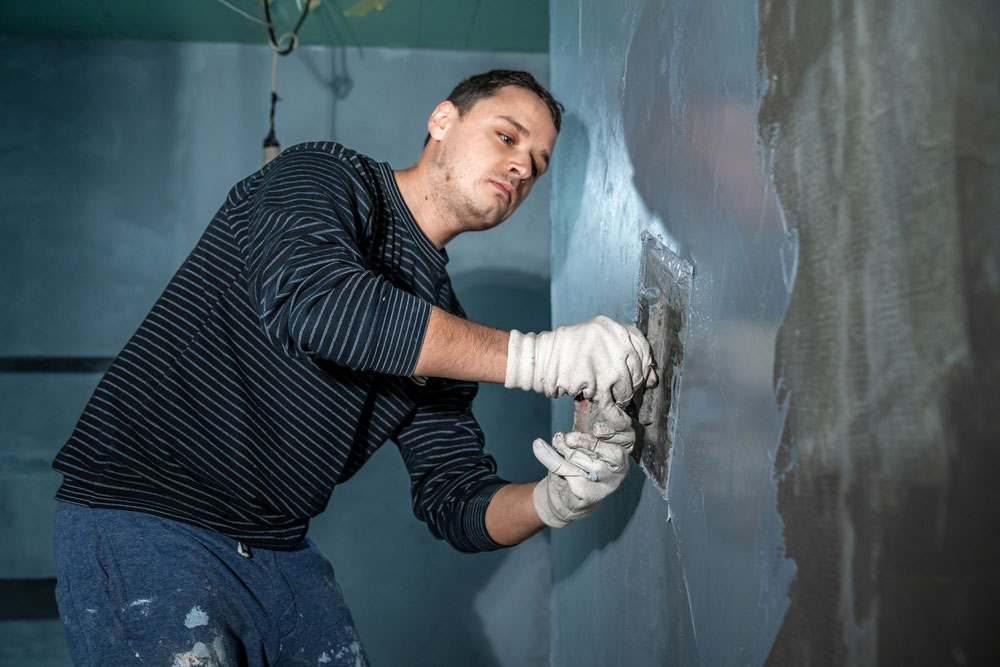
When builders construct new homes, they often apply a thin, asphalt-based coating to the exterior foundation walls known as dampproofing. While this minimal layer serves the basic purpose of blocking soil moisture vapor, it lacks the technical capacity to stop liquid water from actively leaking into your basement.
Relying on residential damp-proofing as your only line of defense leaves your foundation vulnerable to the intense hydrostatic pressures common in many residential neighborhoods. Understanding the vast performance gap between this entry-level coating and an industrial-grade waterproofing system is essential for protecting your property against future flood damage.
Understanding the Limits of Basic Dampproofing
The fundamental purpose of dampproofing is to act as a mild moisture barrier that prevents water vapor from passing through concrete blocks or poured masonry. Because it is essentially a thin application of bitumen, it has almost zero physical strength or elasticity to resist water under pressure.
- Basic dampproofing cannot bridge even the smallest hairline foundation cracks that inevitably form as a new home settles into the soil.
- This material remains brittle as it ages, causing it to flake off or crack, which quickly renders the entire protective layer useless.
- Dampproofing provides no solution for managing liquid water buildup, as it was never designed to resist anything beyond simple damp earth contact.
Thinking of dampproofing as a true “waterproofing” solution is a dangerous misunderstanding that frequently leads to expensive basement flooding after the builder’s warranty expires.
The Superior Engineering of Industrial Waterproofing
In contrast, industrial-grade waterproofing is a comprehensive, multi-layer system engineered to block liquid water under pressure and bridge structural cracks. Professionals use thick, elastomeric polymers that stay flexible for decades, allowing the seal to move and adapt with your house.
- The membrane application process creates a heavy-duty, seamless rubber jacket around the entire below-grade portion of your home’s foundation.
- Industrial systems are specifically rated to withstand standing water pressure without blistering, peeling, or failing over the lifespan of the property.
- These professional solutions often include supplemental drainage boards that physically decompress soil pressure away from your exterior walls.
Investing in this level of engineering ensures that your foundation is shielded by a resilient, active defense rather than a fragile, cosmetic paint.
Mitigating Hydrostatic Pressure with Advanced Materials
Hydrostatic pressure—the force of water-logged soil pushing against your house—is the primary cause of foundation failure and basement leaks. Basic dampproofing offers no relief for this pressure, whereas industrial systems utilize physical drainage components to channel the energy away.
- Dimple-faced drainage boards provide an intentional air gap between the soil and the foundation, giving water a path to travel down to the footing.
- High-capacity perforated pipe networks, installed at the base of the footing, carry immense volumes of groundwater away from your structural footprint.
- The combined use of a thick rubber membrane and an external drainage path ensures that water never has the opportunity to pool against your walls.
Removing the physical force of water from your foundation walls is the only way to prevent bowing, shifting, and major structural wall displacement.
Longevity and The Cost of Material Failure
The performance lifespan of a basic residential dampproofing application is often limited to a few years before the materials begin to degrade. Because the application is so thin, it offers no protection against the natural shifting and cracking that every residential home undergoes over time.
- Industrial-grade polymers remain elastic, meaning they can effectively seal and bridge cracks that widen as the home moves in the soil.
- A true professional waterproofing system is intended to last for the entire life of the house, offering permanent peace of mind rather than temporary relief.
- Replacing failed residential damp-proofing requires massive, expensive excavation work to reach the foundation walls and apply a proper system.
Choosing the industrial approach at the start, or as a remediation project, eliminates the recurring costs and immense stress of dealing with persistent basement leaks.
Protecting Your Real Estate Equity and Air Quality
A basement protected by a failed damp-proofing layer is prone to musty odors, mold growth, and eventual flooding, which significantly diminishes the resale value of your property. Industrial waterproofing maintains a bone-dry subterranean environment, which is the necessary foundation for high-end basement finishing and healthy living spaces.
- A dry basement eliminates the risk of toxic black mold growth, which is a major concern for household respiratory health.
- Professional waterproofing systems turn a damp cellar into a clean, functional square footage that adds tangible market value to your residence.
- Home buyers and mortgage lenders view an industrial-grade, documented foundation defense as a massive value-add during the real estate transaction process.
Securing your foundation with the best materials available protects your financial investment and ensures that your basement remains a perfectly safe and usable asset.
Solidify Your Foundation, Secure Your Peace of Mind
Relying on entry-level residential dampproofing is a gamble that leaves your home exposed to the aggressive forces of groundwater and soil movement. Implementing a comprehensive, industrial-grade waterproofing defense is the only way to guarantee that your foundation remains permanently dry, strong, and stable.
Upgrading your home’s subterranean defense shield eliminates the risk of hidden moisture intrusion and the associated structural headaches. Prioritizing a professional, multi-layered system today safeguards your property equity, improves your indoor air quality, and delivers true protection for the long haul.